
What cinnamon CBD oil actually is
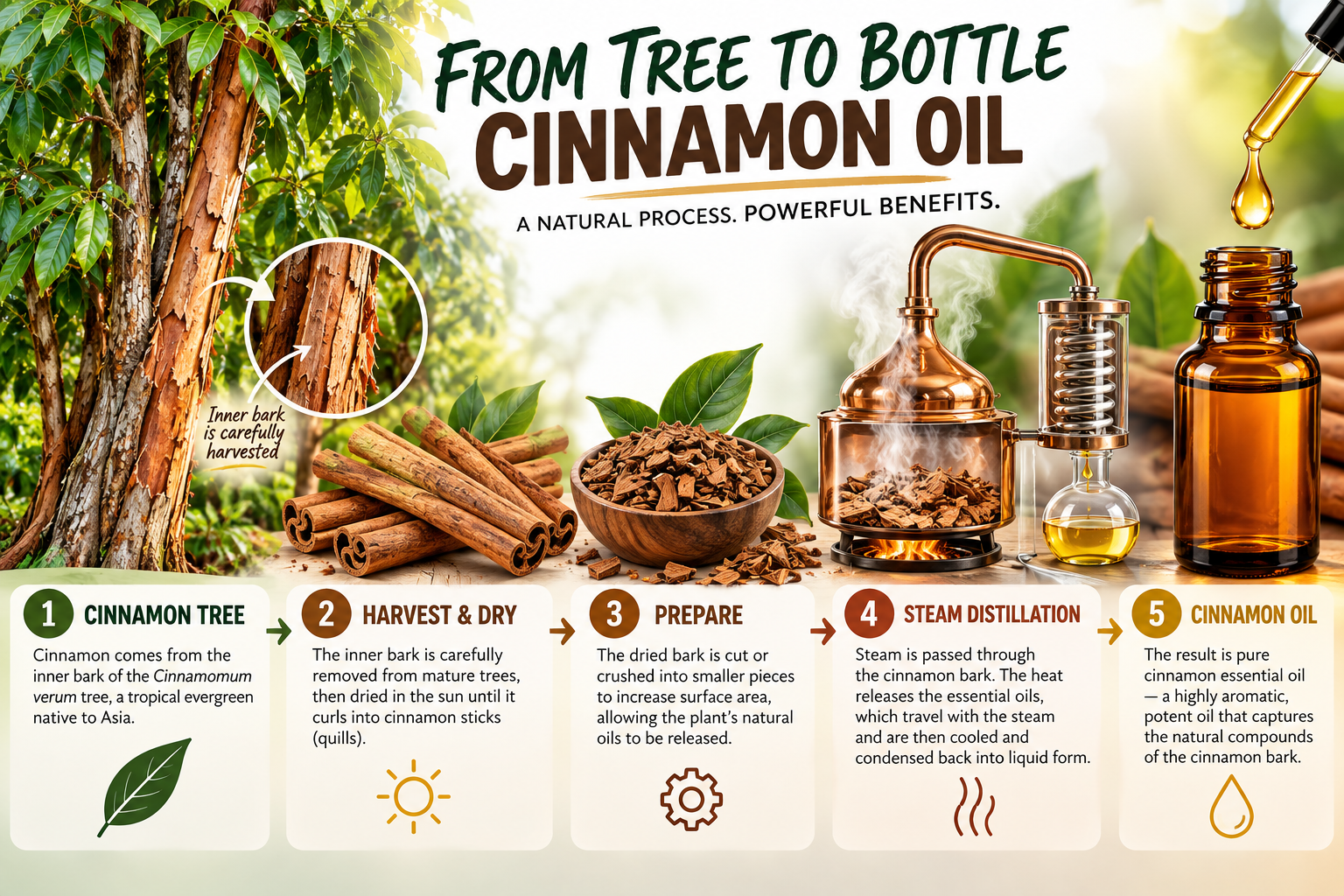
A cinnamon CBD oil is a simple three-part formula: hemp-derived CBD extract, a carrier oil, and cinnamon flavoring. In a well-made tincture, the flavoring is cinnamon bark oil — a concentrated essential oil steam-distilled from the inner bark of the cinnamon tree — rather than an artificial flavor. The result tastes warm and gently sweet instead of earthy, which is the main reason many people reach for it: unflavored full-spectrum hemp extract has a grassy, bitter edge that not everyone enjoys holding under their tongue for a minute.
Our own Cinnamon CBD Oil tincture follows exactly this structure — full-spectrum hemp extract, MCT carrier oil, and natural cinnamon flavor — in 1,000 mg, 1,500 mg, and 3,000 mg strengths.
A short history of cinnamon bark oil
Cinnamon is one of the oldest traded spices in the world. It appears in Egyptian records thousands of years old, was prized in ancient Rome, and drove centuries of maritime trade routes. The essential oil distilled from the bark has been used just as long in traditional wellness practices, valued for its warming character and its role in digestive and seasonal remedies across Ayurvedic and Chinese traditions.
Two species matter for shoppers. Ceylon cinnamon (Cinnamomum verum, sometimes called "true cinnamon") is the milder, more delicate variety. Cassia cinnamon (Cinnamomum cassia) is the stronger, spicier variety common in grocery stores. The distinction matters for safety, which we cover below.
What cinnamon bark oil brings to the table
Cinnamon bark oil's best-studied compound is cinnamaldehyde, which gives the spice its scent and much of its biological activity. Research on cinnamon — mostly in laboratory and early-stage human studies — has explored several areas:
- Antioxidant activity. Cinnamon ranks among the most antioxidant-dense common spices, and its polyphenols have been studied for their ability to help neutralize free radicals.
- Healthy blood sugar metabolism. A number of human trials have examined cinnamon's effect on fasting blood glucose and insulin sensitivity, with mixed but intriguing results. This is an area of active research, not a settled conclusion.
- Normal inflammatory response. Cinnamaldehyde and related compounds have shown effects on inflammatory pathways in preclinical research.
- Antimicrobial properties. Cinnamon bark oil has demonstrated activity against a range of bacteria and fungi in lab settings, one reason it has a long history in food preservation.
It is important to be honest about the limits here: most of this research used cinnamon or cinnamon extract in amounts far larger than the flavoring dose in a CBD tincture. In a tincture, cinnamon's primary job is taste and aroma — any wellness contribution is a pleasant bonus, not the point.
Why CBD and cinnamon work well together
The pairing is more thoughtful than it looks. CBD is a fat-soluble compound with an earthy flavor and, on its own, modest oral bioavailability. Cinnamon bark oil is also fat-soluble, intensely aromatic, and traditionally used to "warm" and enliven formulas. Combined in an oil base, they solve each other's weaknesses: cinnamon smooths hemp's bitterness, and the oil base carries both compounds efficiently.
There is also a sensory argument that experienced CBD users will recognize. A tincture you actually enjoy tasting is a tincture you will take consistently — and consistency, not any single dose, is what determines whether CBD works for you. If a warm cinnamon flavor is what gets the dropper under your tongue every morning, that is a real functional benefit.
The third ingredient that ties it together: MCT oil
MCT oil — medium-chain triglyceride oil, usually derived from coconut — is the quiet workhorse of a good tincture. Unlike long-chain fats, MCTs are absorbed quickly and sent toward the liver, where they are converted into usable energy rather than stored. For a CBD tincture, that matters in three ways:
- Absorption. CBD is fat-soluble, so it needs a fat to move with. MCT oil is one of the most efficient carriers studied for cannabinoids, helping more of each dose become available to your body.
- Stability. MCT oil resists going rancid far better than hemp seed oil or olive oil, which keeps both the CBD and the delicate cinnamon aromatics fresher for longer.
- Neutral taste. MCT oil is nearly flavorless, so it lets the cinnamon lead rather than competing with it.
The combined effect of the three ingredients is a tincture that absorbs predictably, tastes warm and clean, and holds its potency on the shelf — which is why this exact trio has become the standard architecture of quality flavored CBD oils.
Who it's for, when to take it, and how
Who: Cinnamon CBD oil suits adults who want the benefits of a full-spectrum tincture but dislike the taste of unflavored hemp, and anyone who enjoys warm, spiced flavors in their routine — it pairs naturally with morning coffee, tea, or oatmeal.
When: There is no single right time. Morning doses suit people using CBD for daytime calm and focus; evening doses suit those winding down. What matters is taking it at roughly the same time each day for at least two weeks before judging the results.
How: Shake the bottle, fill the dropper to your target amount, place the oil under your tongue, and hold it there for 60 to 90 seconds before swallowing. That sublingual window lets some of the CBD absorb directly through the tissue under the tongue, which works faster than swallowing immediately. Start low — many people begin around 15–25 mg — and adjust gradually. Our Cinnamon CBD Oil product page includes a per-strength dosing chart to make the math easy.
Where: Buy from a manufacturer that publishes a current, batch-matched third-party Certificate of Analysis. That document is your only reliable proof of what is — and is not — in the bottle.
Risks and who should be cautious
Cinnamon CBD oil is well tolerated by most adults, but a few honest cautions apply:
- Coumarin content. Cassia cinnamon contains coumarin, which in very high amounts can stress the liver. The tiny flavoring quantities in a tincture are not a concern for healthy adults, but people with liver conditions should mention it to their clinician.
- Mouth sensitivity. Concentrated cinnamon oil can irritate sensitive mouths in rare cases. If you notice tingling or soreness, dilute the dose in a drink instead of taking it sublingually.
- Blood sugar and medications. Because cinnamon has been studied for effects on blood glucose, people on diabetes medication should loop in their doctor. The same applies to CBD, which can interact with medications metabolized by the liver's CYP450 enzymes — including some blood thinners and seizure medications.
- Pregnancy and breastfeeding. There is not enough safety data on either CBD or concentrated cinnamon oil during pregnancy or nursing; skip it.
As with any CBD product, start with a low dose, give it consistent time, and talk with a healthcare professional if you take any prescription medications.
The bottom line
Cinnamon CBD oil is not a gimmick flavor — it is a practical pairing of three ingredients that each earn their place: CBD for its interaction with the endocannabinoid system, MCT oil for absorption and shelf stability, and cinnamon bark oil for a warm taste backed by centuries of traditional use and a growing body of modern research. If you have been putting off CBD because of the taste of unflavored tinctures, cinnamon is the most natural place to start.